1. Roundworms (Ascaris lumbricoides)
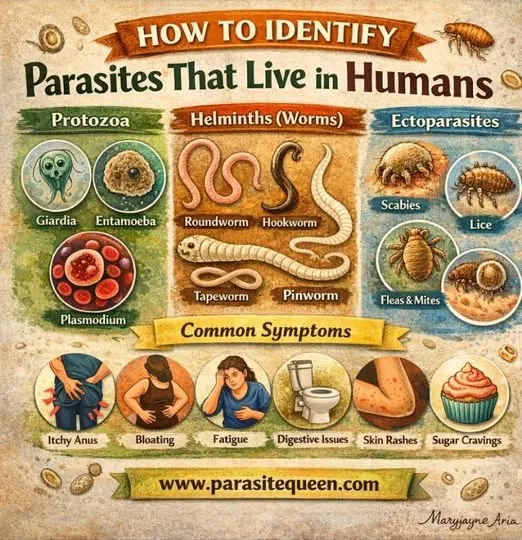
These are among the largest intestinal worms in humans.
Size: 15 to 35 cm long, about the thickness of a pencil.
Appearance: Pale, smooth, cylindrical worms.
Where found: Small intestine, sometimes passed in stool or vomit.
Symptoms may include abdominal discomfort, bloating, coughing during lung migration, and visible worms in stool.
2. Tapeworms (Taenia species and Diphyllobothrium latum)
These are segmented worms that can grow very long.
Size: Several meters in length, segments called proglottids are visible and resemble rice grains.
Appearance: Flat, ribbon like body made of segments.
Where found: Intestine, segments often seen in stool or around the anal area.
Symptoms can include nutrient deficiencies, weight loss, or mild digestive issues.
3. Pinworms (Enterobius vermicularis)
Very common, especially in children.
Size: 5 to 10 mm, thin and white like thread.
Appearance: Small, thread like worms.
Where found: Around the anus, especially at night.
Symptoms include intense itching, disturbed sleep, and irritability.
4. Liver Flukes (Fasciola hepatica and others)
Flat parasites that affect the liver and bile ducts.
Size: 2 to 3 cm long.
Appearance: Leaf shaped.
Where found: Liver and bile ducts, rarely seen unless expelled.
Symptoms may include fatigue, digestive distress, and liver discomfort.
5. Intestinal Flukes (Fasciolopsis buski)
Size: Up to 7 cm long.
Appearance: Flat, fleshy worms.
Where found: Intestines.
Symptoms may include diarrhea, swelling, and malabsorption.
Protocols often used to Remove Parasites:
A combined approach often produces the best outcomes. This includes pharmaceutical treatment, herbal support, dietary changes, and detox support.
General Pharmaceutical Options.
Mebendazole:
Adults and children over 2 years: 100 mg twice daily for 3 days or a single dose repeated in 2 weeks depending on parasite.
Albendazole
Adults and children over 2 years: 400 mg single dose for many worms, repeated after 2 weeks.
For larger infestations, may be taken daily for 3 to 7 days.
Ivermectin
Dose based on body weight, typically 150 to 200 mcg per kg as a single dose, sometimes repeated.
Praziquantel
Used for tapeworms and flukes. Dose varies depending on species.
General Herbal Options (short list)
Wormwood
Black walnut hull
Clove
Garlic
Oregano oil
Neem
These are often combined to target adult parasites, larvae, and eggs.
Age Appropriate Considerations:
Children require lower dosing and gentler approaches.
Focus on hygiene, shorter treatment cycles, and careful monitoring.
Always adjust doses based on weight and age.
Dietary Support
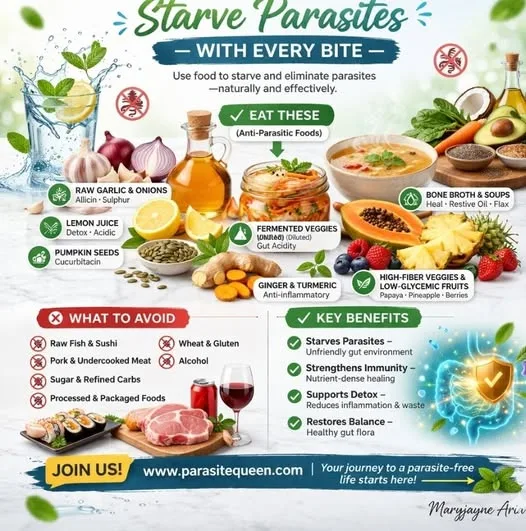
Stop sugar and refined carbohydrates.
Increase fiber to support elimination.
Include garlic, pumpkin seeds, papaya seeds, and ginger.
Support digestive strength with bitter foods when appropriate.
Binders and Detox Support
When parasites die, they release toxins that can trigger fatigue, headaches, or skin reactions.
Binders help absorb these toxins and support safe elimination.
Activated charcoal
Bentonite clay
Zeolite
This is a short list.
Take binders away from medications and supplements.
Hydration
Increasing water intake is essential.
Water supports detoxification, bowel regularity, and reduces toxin buildup.
Aim for steady intake throughout the day.
Support the Gut with probiotics.
Combined Approach
The most effective strategy often includes
Targeted pharmaceutical treatment
Herbal support for multiple life stages
Dietary adjustments
Binders to manage toxin release
Adequate hydration
Consistency matters, as many parasites require repeated cycles to fully clear.
Written for information only. The article is not medical advice
Written by Maryjayne Aria
Author of Immune Health, Terrain & GcMAF
For more insights into how parasites impact health and what to do, visit www.parasitequeen.com
Join our parasitequeen information group for more insights