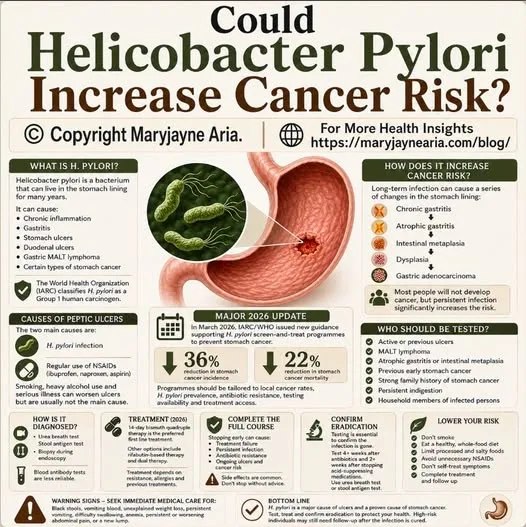
Helicobacter pylori, commonly known as H. pylori, is a type of bacteria that can live in the lining of the stomach for many years. Millions of people carry the infection without knowing it because it often causes no symptoms. However, in some people it can lead to chronic inflammation, gastritis, stomach ulcers, duodenal ulcers, gastric MALT lymphoma, and certain types of stomach cancer.
The International Agency for Research on Cancer (IARC), part of the World Health Organization (WHO), classifies H. pylori as a Group 1 human carcinogen. This means there is strong scientific evidence that long term infection can contribute to the development of stomach cancer.
How H. pylori Causes Ulcers:
H. pylori damages the stomach's protective mucus lining, allowing stomach acid to irritate the underlying tissue. Over time, this ongoing inflammation can result in painful ulcers in the stomach or the first part of the small intestine, known as the duodenum.
Common symptoms of an ulcer include:
• Burning or gnawing pain in the upper abdomen
• Pain that is worse when the stomach is empty or during the night
• Bloating
• Nausea
• Frequent burping
• Loss of appetite
Some ulcers cause few or no symptoms until they bleed or develop serious complications.
Not All Ulcers Are Caused by H. pylori:
The two leading causes of peptic ulcers are H. pylori infection and regular use of nonsteroidal anti-inflammatory drugs (NSAIDs), including ibuprofen, naproxen, and aspirin.
Smoking, heavy alcohol consumption, and certain serious illnesses can delay healing and increase complications, but they are usually not the primary cause of ulcers on their own.
How H. pylori Increases Stomach Cancer Risk
Long standing H. pylori infection can gradually damage the stomach lining through a series of changes:
• Chronic gastritis
• Atrophic gastritis, where normal stomach glands are lost
• Intestinal metaplasia
• Dysplasia
• Gastric adenocarcinoma
Although most people with H. pylori never develop stomach cancer, persistent infection significantly increases the risk, especially in smokers, those who consume large amounts of salty or processed foods, people with a family history of stomach cancer, or those with precancerous stomach changes.
Important 2026 Update
In March 2026, an IARC/WHO Working Group published updated guidance supporting well designed H. pylori screening and treatment programmes as an effective population level strategy for preventing stomach cancer.
Research reviewed by the group found that successful treatment reduced:
• Stomach cancer incidence by approximately 36%
• Stomach cancer deaths by approximately 22%
The report also emphasised that screening programmes should be tailored to local cancer rates, H. pylori prevalence, antibiotic resistance patterns, availability of testing, and access to treatment.
Why Early Treatment Matters:
The earlier H. pylori is detected and treated, the greater the opportunity to prevent long term damage and reduce cancer risk.
Treatment remains beneficial for people at higher risk, including those with a strong family history of stomach cancer or individuals previously treated for early stomach cancer.
However, if advanced stomach damage such as atrophic gastritis or intestinal metaplasia has already developed, treatment may not completely reverse these changes. Some people will still require long term monitoring.
Who Should Be Tested?
Testing may be recommended for people with:
• Active stomach or duodenal ulcers
• A previous history of peptic ulcers
• Gastric MALT lymphoma
• Atrophic gastritis
• Gastric intestinal metaplasia
• Previous treatment for early stomach cancer
• A strong family history of stomach cancer
• Persistent indigestion when medically appropriate
Current American College of Gastroenterology guidance also recommends considering testing adult household members of someone with confirmed H. pylori infection.
How Is H. pylori Diagnosed?
The most reliable tests for active infection include:
• Urea breath test
• Stool antigen test
• Biopsy testing during an upper endoscopy
Blood antibody tests are generally less useful because antibodies may remain positive long after the infection has been successfully treated.
When Is an Endoscopy Needed?
A gastroscopy or upper endoscopy may be recommended if there are warning symptoms or a higher risk of stomach cancer.
During the procedure, doctors can examine the stomach directly and obtain biopsies to look for:
• H. pylori
• Ulcers
• Atrophic gastritis
• Intestinal metaplasia
• Dysplasia
• Cancer
Current Treatment Recommendations
Treatment usually combines a powerful acid suppressing medication with several antibiotics and, in many cases, bismuth.
The 2024 American College of Gastroenterology guideline recommends a 14 day optimised bismuth quadruple therapy as the preferred first line treatment when antibiotic sensitivity is unknown.
Other treatment options may include:
• Rifabutin based triple therapy
• Vonoprazan and amoxicillin dual therapy
• Antibiotic susceptibility guided treatment
The best treatment depends on antibiotic resistance, previous antibiotic exposure, penicillin allergy, prior treatment failures, and medication availability.
Why Older Treatments May No Longer Work
Resistance to clarithromycin has increased significantly in many parts of the world. As a result, traditional clarithromycin triple therapy is no longer recommended unless testing confirms the bacteria are susceptible or local guidelines support its use.
Complete the Entire Course of Treatment
Stopping treatment too early or missing doses can lead to:
• Treatment failure
• Persistent infection
• Antibiotic resistance
• Continued ulcer formation
• Ongoing stomach cancer risk
Common side effects include nausea, changes in taste, loose stools, and dark stools caused by bismuth. Speak with your healthcare provider if side effects occur rather than stopping treatment without medical advice.
Confirm That the Infection Is Gone
Feeling better does not necessarily mean H. pylori has been eliminated.
Current guidelines recommend confirming eradication using:
• Urea breath testing
• Stool antigen testing
• Occasionally biopsy based testing
Testing is generally performed at least four weeks after completing antibiotics and after acid suppressing medications have been stopped for at least two weeks when medically appropriate.
Does Treatment Eliminate Cancer Risk?
No. Successful treatment significantly lowers the risk of stomach cancer but does not eliminate it completely.
The remaining risk is higher in people with:
• Atrophic gastritis
• Intestinal metaplasia
• Dysplasia
• Previous stomach cancer
• Strong family history
• Smoking
• Diets high in salt and processed foods
Some people may require ongoing endoscopic surveillance even after the infection has been successfully treated.
Additional Ways to Protect Your Stomach
You can further reduce your risk by:
• Avoiding smoking
• Limiting highly salted, smoked, and heavily processed foods
• Eating a diet rich in fruits, vegetables, legumes, and minimally processed foods
• Avoiding unnecessary use of NSAID painkillers
• Seeking medical advice for persistent stomach symptoms rather than relying solely on antacids
• Completing treatment exactly as prescribed and attending follow up testing
Warning Signs That Require Immediate Medical Attention:
Seek prompt medical care if you experience:
• Black, tar like stools
• Vomiting blood or material that resembles coffee grounds
• Unexplained weight loss
• Persistent vomiting
• Difficulty swallowing
• Feeling full after eating only a small amount
• Anaemia, unusual tiredness, or paleness
• Persistent or worsening upper abdominal pain
• A new lump or swelling in the abdomen
Sudden severe abdominal pain, vomiting blood, black stools, or fainting may indicate a bleeding or perforated ulcer and require emergency medical treatment.
Final Thoughts:
H. pylori is one of the leading causes of stomach ulcers and is a proven risk factor for stomach cancer.
The latest international guidance highlights that identifying and treating H. pylori early can substantially reduce the future risk of stomach cancer. The three most important steps are appropriate testing, completing an effective treatment regimen, and confirming that the infection has been successfully eradicated.
Individuals with precancerous stomach changes or other significant risk factors may still require ongoing medical follow up, even after successful treatment.
Medical Disclaimer:
This article is for educational purposes only and should not replace professional medical advice, diagnosis, or treatment. Never start or stop antibiotics or acid suppressing medications without consulting your healthcare provider. If you have persistent stomach symptoms, a history of ulcers, a family history of stomach cancer, or experience warning signs such as vomiting blood, black stools, unexplained weight loss, or persistent vomiting, seek prompt medical attention.