The idea may sound unpleasant, but it is a scientifically valid question. If parasites live inside the human body, do they produce waste? The answer is yes. Like all living organisms, parasites consume nutrients, produce energy, and eliminate metabolic waste. Understanding what happens to this waste can help explain why some parasitic infections are associated with inflammation, digestive disturbances, and immune activation.
It is important to note that not all symptoms experienced by people with parasites are caused by parasite waste alone. The body's immune response, tissue damage, nutritional deficiencies, and coexisting infections also play significant roles.
Do Parasites Produce Waste?
Yes. Every parasite has a metabolism. They digest nutrients taken from their host and produce waste products that must be eliminated. Depending on the species, these wastes may include:
• Carbon dioxide
• Ammonia
• Urea or uric acid-like nitrogenous compounds
• Organic acids
• Digestive enzymes
• Undigested food particles
• Cellular debris
• Excretory-secretory proteins
• Molecules that help the parasite evade the immune system
Many parasites release these substances directly into the surrounding tissues, bloodstream, intestines, or other organs they inhabit.
Do Parasites Actually Poop?
Many parasites do.
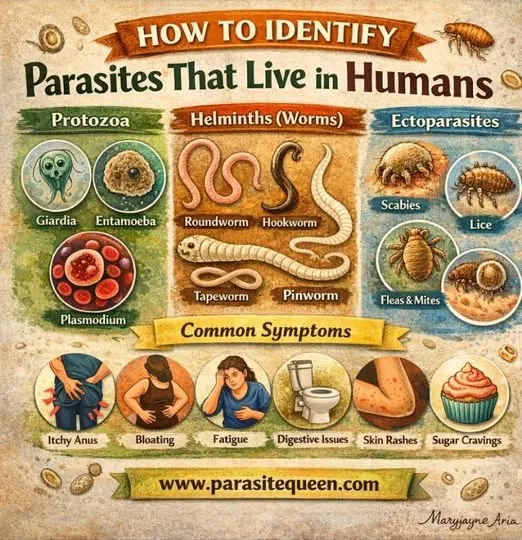
Roundworms (nematodes), tapeworms (cestodes), and flukes (trematodes) have digestive systems that process food and eliminate waste.
Some parasites have a complete digestive tract with both a mouth and an anus.
Others, such as tapeworms, absorb nutrients directly through their outer surface rather than using a traditional digestive tract. They still generate metabolic waste, but it leaves the parasite through specialized cells and across their body surface instead of conventional bowel movements.
Single-celled parasites such as Giardia and Entamoeba use microscopic organelles to remove waste from inside the cell.
So while "pooping" may not look the same across every parasite species, all parasites must eliminate waste products.
Do Parasites Urinate?
Not in the same way humans do.
Parasites do not have kidneys or bladders, but many possess specialized excretory systems that remove excess water and nitrogen-containing waste.
Examples include:
• Excretory pores
• Flame cells (found in flatworms)
• Renette cells (found in nematodes)
• Contractile vacuoles (in some protozoa)
These systems function somewhat like primitive kidneys by helping regulate fluid balance and removing unwanted metabolic byproducts.
How Often Do Parasites Eliminate Waste?
There is no single answer because it depends on:
• The species
• Size of the parasite
• Amount of food available
• Stage of its life cycle
• Temperature
• Oxygen levels
Generally, parasites eliminate metabolic waste continuously or several times throughout the day.
Large intestinal worms that feed regularly may continuously release waste into the bowel.
Microscopic parasites produce waste constantly as they metabolize nutrients.
Heavy parasite burdens involving hundreds or thousands of organisms can therefore generate a substantial amount of metabolic waste.
What Happens to the Waste?
Once released, parasite waste enters the surrounding environment within the body.
Depending on where the parasite lives, waste products may enter:
• The intestinal contents
• Bloodstream
• Lymphatic system
• Liver
• Lungs
• Muscles
• Brain
• Other tissues
The body attempts to neutralize and eliminate these substances through several organs.
The Liver
The liver processes many foreign molecules and toxins before they are excreted in bile.
The Kidneys
Water-soluble waste products are filtered into urine.
The Intestines
Some waste leaves the body in stool.
The Immune System:
Immune cells identify parasite proteins and waste products, producing inflammatory chemicals to help fight infection.
Can Parasite Waste Be Toxic?
Parasite waste contains biologically active substances that can stimulate the immune system and contribute to inflammation. Laboratory research has shown that parasites release proteins, enzymes, and other molecules that help them survive and interact with their host.
In some infections these substances may contribute to symptoms such as:
• Fatigue
• Nausea
• Bloating
• Abdominal discomfort
• Diarrhoea
• Headaches
• Skin irritation
• Loss of appetite
• Brain fog
• General malaise
However, the severity of symptoms varies greatly depending on the parasite, the number of organisms present, the person's immune response, nutritional status, and any underlying medical conditions.
Why Can Symptoms Sometimes Worsen During Treatment?
When parasites die, they release additional cellular contents that the immune system must clear. This can temporarily increase inflammation in some people.
This temporary worsening is sometimes described as a Jarisch-Herxheimer-like reaction, although the classic Jarisch-Herxheimer reaction specifically refers to treatment of certain bacterial infections. Not everyone experiences this effect during parasite treatment, and symptoms should not automatically be attributed to "die-off."
Maintaining adequate hydration and following treatment under appropriate medical guidance may help support recovery.
Does Parasite Waste Affect Gut Health?
Research suggests parasites may influence the gut environment by:
• Altering the intestinal microbiome
• Damaging the intestinal lining
• Increasing intestinal permeability in some infections
• Triggering chronic inflammation
• Competing for nutrients
• Affecting digestion and absorption
These changes may contribute to nutritional deficiencies, particularly if infection is prolonged.
Does the Body Eventually Remove the Waste?
In healthy individuals, the liver, kidneys, intestines, lungs, lymphatic system, and immune system continuously work together to remove parasite waste and inflammatory byproducts.
However, if the parasite infection persists, new waste products continue to be produced until the parasites are successfully eliminated.
The Bottom Line:
Parasites are living organisms that eat, grow, reproduce, and eliminate waste. Although they do not urinate or defecate exactly as humans do, every parasite must dispose of metabolic byproducts. Their waste can interact with the immune system and may contribute to inflammation and symptoms during infection, but it is only one part of the complex relationship between parasites and their host.
Understanding how parasites live inside the body highlights why early diagnosis, appropriate treatment, good nutrition, and supporting normal liver, kidney, and gastrointestinal function are all important components of recovery.