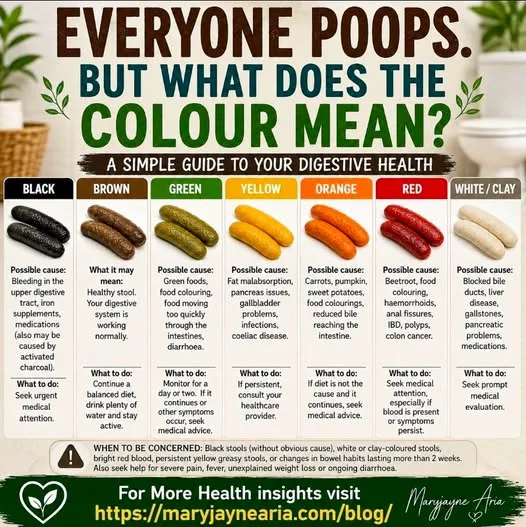
Let's be honest. Every single one of us poops. It is one of the body's most important ways of removing waste, toxins, bacteria, excess bile, and the byproducts of digestion. Yet most people flush without taking a second look.
Your stool/poop can provide valuable clues about your health. A change in colour is not always a cause for alarm, but sometimes it can be an early warning sign that something needs medical attention.
Brown:
Healthy stool is usually light to dark brown. This colour comes from bile, a digestive fluid made by the liver, and the breakdown of red blood cells.
What it may mean:
• Your digestive system is working normally.
What to do:
• Continue eating a balanced diet rich in fibre, drink plenty of water, and stay active.
Green:
Green stool is often harmless.
Possible causes:
• Eating large amounts of spinach, kale, or other green vegetables.
• Green food colouring.
• Food moving too quickly through the intestines, giving bile less time to turn brown.
• Diarrhoea.
What to do:
• Monitor for a day or two. If it continues, especially with diarrhoea, abdominal pain, or fever, seek advice.
Yellow:
Yellow, greasy, foul-smelling stool may suggest excess fat that is not being absorbed properly.
Possible causes:
• Problems with the pancreas.
• Gallbladder disease.
• Liver disorders.
• Coeliac disease.
• Certain intestinal infections.
What to do:
• If persistent, consult your healthcare provider. You may need testing to identify the underlying cause.
Orange:
Orange stool is often caused by diet.
Possible causes:
• Carrots, sweet potatoes, pumpkin.
• Food colourings.
• Reduced bile reaching the intestine.
What to do:
• If diet is not the cause and it continues, seek healthcare advice.
Red:
Seeing red stool can be alarming.
Possible harmless causes:
• Beetroot.
• Red food colouring.
• Cranberries.
Possible medical causes:
• Haemorrhoids.
• Anal fissures.
• Inflammatory bowel disease.
• Diverticular bleeding.
• Colon polyps.
• Colorectal cancer.
What to do:
• If you notice blood and cannot explain it by food, or if bleeding is heavy, recurrent, or accompanied by dizziness or weakness, seek urgent medical assessment.
Black:
Black stool should never be ignored unless you know the cause.
Possible harmless causes:
• Iron supplements.
• Activated charcoal.
• Bismuth-containing medications.
Possible medical causes:
• Bleeding from the stomach or upper digestive tract. Blood becomes black as it is digested.
What to do:
• If you are not taking iron or medications known to darken stool, seek urgent medical care immediately.
White, Grey, or Clay Coloured:
This colour usually indicates there is little or no bile entering the intestine.
Possible causes:
• Blocked bile ducts.
• Gallstones.
• Liver disease.
• Pancreatic disorders.
• Certain medications.
What to do:
• Arrange prompt medical evaluation, particularly if accompanied by yellowing of the skin or eyes, dark urine, or abdominal pain.
When Should You Be Concerned?
Contact your healthcare provider if you notice:
• Black stools without an obvious cause.
• White or clay coloured stools.
• Bright red blood in the stool.
• Persistent yellow, greasy stools.
• Changes in bowel habits lasting more than two weeks.
• Severe abdominal pain, fever, unexplained weight loss, or ongoing diarrhoea.
Healthy Stool/Poop Tips
To support healthy bowel function:
• Eat plenty of fibre from vegetables, fruits, legumes, and whole grains.
• Drink adequate water throughout the day.
• Exercise regularly.
• Include fermented foods or probiotics if appropriate.
• Avoid processed foods, food colourings and alcohol.
• Consider discussing persistent digestive symptoms with your healthcare provider rather than self-diagnosing.
Your stool/poop is one of the easiest health checks you can perform. Taking a quick glance before flushing may reveal important clues about your digestive health. While many colour changes are simply related to food or medications, some can signal serious conditions that should not be ignored.
Your body is constantly communicating with you. Sometimes, the message is right there in the toilet bowl.
Written by Maryjayne Aria author of Immune Health, Terrain and GcMaf