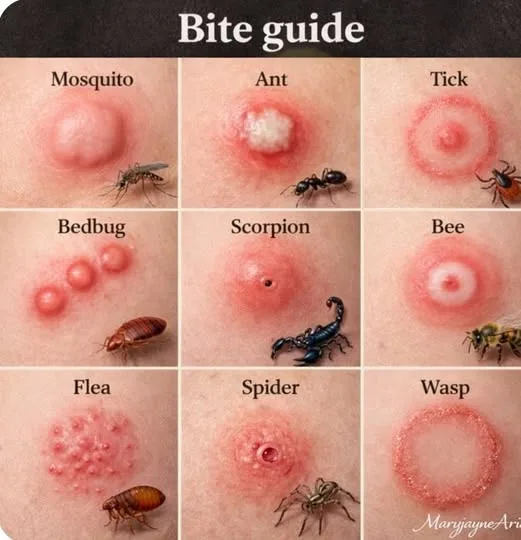
This is such an important topic because early recognition changes outcomes. Most bites are harmless and self limiting, but some require quick action to prevent complications. Understanding what the skin is telling you helps you respond calmly and correctly.
Mosquito
Usually a raised, itchy welt that appears within minutes. It is a histamine reaction, not infection.
Early intervention:
Wash with soap and water.
Apply cold compress for 10 minutes.
Use topical antihistamine or mild hydrocortisone if very itchy.
Avoid scratching to prevent secondary bacterial infection.
Ant
Red bump, sometimes with a white pustule, especially with fire ants.
Early intervention:
Clean the area thoroughly.
Apply cold compress.
Do not squeeze pustules as this increases infection risk.
Watch for spreading redness which may suggest cellulitis.
Tick
Can appear as a small red bump, but the concern is what the tick may transmit. A spreading bullseye rash days later can signal Lyme disease.
Early intervention:
Remove tick promptly with fine tweezers, pulling straight out.
Disinfect the area.
Monitor for fever, fatigue, joint pain, or expanding rash for 30 days.
Seek medical advice if symptoms develop. Early antibiotic treatment is highly effective.
Bedbug
Often multiple bites in a line or cluster. Intensely itchy.
Early intervention:
Wash bedding at high temperature.
Inspect mattress seams.
Use anti itch cream.
Treat environment to prevent ongoing exposure.
Scorpion
Painful, swollen area, sometimes with a visible puncture.
Early intervention:
Clean area.
Apply cold compress.
Keep limb elevated.
Seek urgent medical care if numbness, muscle twitching, breathing difficulty, or severe pain occurs, especially in children.
Bee
Central puncture with redness and swelling.
Early intervention:
Remove stinger quickly by scraping sideways.
Wash area.
Cold compress.
Monitor for allergic reaction such as throat swelling, hives, or dizziness. Emergency care is needed if systemic symptoms appear.
Wasp
Similar to bee but usually no retained stinger. Often more painful.
Early intervention:
Wash area.
Cold compress.
Oral antihistamine if swelling increases.
Monitor for allergic reaction.
Spider
Often red, tender, sometimes blistering. True spider bites are less common than people think.
Early intervention:
Clean area.
Apply cold compress.
Seek care if pain worsens, tissue becomes dark, or ulcer develops.
Flea
Small clustered red dots, usually on ankles or lower legs.
Early intervention:
Wash area.
Treat pets and home environment.
Use soothing lotion for itching.
Ringworm
Not a bite. It is a fungal infection that forms a circular red rash with clearer center.
Early intervention:
Use topical antifungal cream for 2 to 4 weeks.
Keep area dry.
Avoid steroid creams unless prescribed as they can worsen fungal infections.
When to seek urgent care
Rapid swelling of face or throat
Difficulty breathing
Severe spreading redness
High fever
Signs of systemic illness
Early intervention is about three things: clean the skin, reduce inflammation, and monitor for progression. Most complications happen when bites are ignored, scratched open, or misidentified.
The skin is not just reacting. It is communicating. If you listen early, you prevent escalation later.
Copyright Maryjayne Aria
FEEL FREE TO FOLLOW ME
FEEL FREE TO SHARE THIS POST