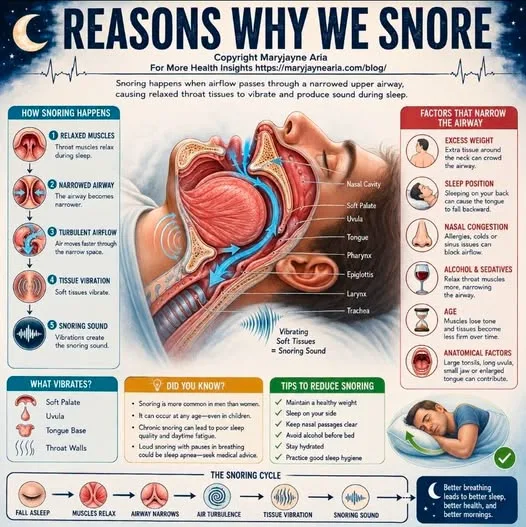
Snoring is one of the most common sleep-related problems, affecting millions of people worldwide. While many people think of snoring as nothing more than an annoyance, it can sometimes be a sign that something more serious is happening within the upper airway. Understanding why snoring occurs can help identify simple lifestyle changes, medical conditions, and treatment options that may improve both sleep quality and overall health.
What Is Snoring?
Snoring is the sound produced when airflow becomes partially blocked as it passes through the nose, mouth, and throat during sleep. As the muscles of the throat relax, the airway narrows. Air moving through this smaller opening becomes turbulent, causing the surrounding soft tissues to vibrate. These vibrations create the familiar snoring sound.
The louder the vibration, the louder the snoring.
How Normal Breathing Differs:
During quiet breathing:
• The airway remains open.
• Air flows smoothly into the lungs.
• Soft tissues remain stable.
• Breathing is silent.
During snoring:
• The muscles of the throat relax excessively. • The airway becomes narrower.
• Airflow becomes turbulent.
• The soft palate, uvula, tongue, and throat walls vibrate.
• The vibration produces sound.
Which Parts of the Airway Vibrate?
Several structures may contribute to snoring, including:
• The soft palate.
• The uvula.
• The base of the tongue.
• The side walls of the throat (pharynx).
• In some people, enlarged tonsils or adenoids.
Different people snore for different reasons, and more than one structure may be involved.
Why Does the Airway Narrow?
Numerous factors can reduce the size of the airway during sleep.
Muscle Relaxation:
As we fall asleep, the muscles supporting the throat naturally relax. In some individuals, this relaxation becomes excessive, allowing the airway to partially collapse.
Sleeping Position:
Sleeping on your back allows gravity to pull the tongue and soft tissues backwards, increasing airway obstruction.
Excess Body Weight:
Extra fatty tissue around the neck places pressure on the airway, making it more likely to narrow during sleep.
Nasal Congestion:
Allergies, sinus infections, nasal polyps, deviated septum, or the common cold can restrict airflow through the nose, encouraging mouth breathing and increasing snoring.
Alcohol:
Alcohol relaxes throat muscles even further, especially when consumed in the evening, making snoring more likely.
Sedative Medications:
Sleeping tablets, muscle relaxants, and certain medications may contribute to airway collapse.
Ageing:
As we grow older, muscle tone naturally declines. The tissues of the throat become less firm and more prone to vibration.
Anatomy:
Some people naturally have:
• A small jaw.
• A large tongue.
• Enlarged tonsils.
• An elongated soft palate.
• A long uvula.
• A naturally narrow airway.
These anatomical differences can increase the likelihood of snoring.
The Science Behind the Sound:
Snoring does not originate from the lungs.
The sound is produced entirely by vibrating tissues within the upper airway. As airflow speeds through a narrowed passage, pressure changes cause these tissues to flutter rapidly, much like a flag flapping in strong wind.
The smaller the airway becomes, the greater the turbulence and the louder the vibration.
Can Snoring Become Dangerous?
Occasional snoring is usually harmless.
However, loud, persistent snoring accompanied by repeated pauses in breathing may indicate obstructive sleep apnoea (OSA).
During obstructive sleep apnoea:
• The airway repeatedly closes.
• Breathing temporarily stops.
• Blood oxygen levels fall.
• The brain briefly awakens to restart breathing.
These interruptions may occur dozens or even hundreds of times each night, often without the individual remembering them.
Symptoms That May Suggest Sleep Apnoea:
Seek medical evaluation if snoring is accompanied by:
• Witnessed pauses in breathing.
• Gasping or choking during sleep.
• Excessive daytime sleepiness.
• Morning headaches.
• Difficulty concentrating.
• Irritability. • High blood pressure.
• Poor memory.
• Unrefreshing sleep.
Sleep apnoea has been linked with an increased risk of cardiovascular disease, stroke, type 2 diabetes, heart rhythm disorders, and reduced quality of life.
Can Snoring Be Reduced?
Many people can significantly reduce snoring through lifestyle changes.
Helpful strategies include:
• Losing excess weight.
• Sleeping on your side rather than your back.
• Treating nasal congestion.
• Avoiding alcohol before bedtime.
• Quitting smoking.
• Maintaining good sleep hygiene.
• Exercising regularly to improve muscle tone.
• Remaining well hydrated.
Some individuals benefit from:
• Nasal dilator strips.
• Oral mandibular advancement devices.
• Continuous Positive Airway Pressure (CPAP) therapy if sleep apnoea is diagnosed.
• Surgical procedures when anatomical problems significantly obstruct the airway.
Interesting Facts About Snoring:
• Around 40% of adult men and 24% of adult women snore regularly.
• Snoring often becomes more common with age.
• Children can snore too, particularly if they have enlarged tonsils or adenoids.
• Pregnancy can temporarily increase snoring due to hormonal changes and nasal congestion.
• Loud snoring can exceed 90 decibels, similar to the sound of heavy traffic.
The Bottom Line:
Snoring occurs because relaxed tissues in the upper airway vibrate as air passes through a narrowed passage during sleep. While occasional snoring is common and often harmless, persistent or loud snoring, especially when accompanied by pauses in breathing or excessive daytime fatigue, should not be ignored.
Identifying the underlying cause is the first step towards improving sleep quality, reducing health risks, and restoring restful nights for both the snorer and those sharing the bedroom.